Table of Contents
ToggleA cleaning chart transforms home maintenance from a chaotic, last-minute scramble into a manageable, systematic routine. Instead of wondering what didn’t get cleaned last week or scrubbing frantically before guests arrive, a well-organized house cleaning chart ensures every room, surface, and appliance gets attention on schedule. For homeowners balancing work, family, and life’s other demands, having a clear breakdown of daily, weekly, monthly, and seasonal tasks removes decision fatigue and keeps the home fresh without burning out. This guide walks through building and customizing a cleaning chart that fits your household’s actual needs, not some magazine’s fantasy schedule.
Key Takeaways
- A house cleaning chart organizes daily, weekly, monthly, and seasonal tasks into a manageable system that prevents buildup and eliminates decision fatigue.
- Daily maintenance tasks like wiping surfaces, quick sweeps, and clutter resets take just minutes but prevent dirt and grime from accumulating throughout the week.
- Weekly deep-cleaning tasks should rotate focus areas (bathrooms one week, kitchen appliances another) so the entire home gets attention without overwhelming any single day.
- Monthly deep cleaning tackles neglected areas like oven interiors, grout lines, and baseboards, making a noticeable difference in overall home freshness.
- Seasonal maintenance performed quarterly or twice yearly handles major tasks like carpet deep-cleaning, window washing, and HVAC filter changes that align with weather changes.
- The most effective cleaning chart matches your household’s actual standards and capacity, not Pinterest-perfect templates—adjust it quarterly to remove unrealistic tasks and prioritize what matters most.
Why Every Household Needs a Cleaning Chart
Without a cleaning chart, tasks pile up invisibly. Baseboards haven’t been wiped in months. The refrigerator coils are forgotten. Grout gets neglected. A chart prevents this creep by making invisible work visible and distributable across weeks and seasons.
A structured cleaning chart also enables delegation. When household members see specific tasks assigned to specific days, they know exactly what to do instead of defaulting to whoever feels obligated. It removes ambiguity, no more “Did someone already clean the bathrooms?” arguments.
Most importantly, a chart saves time overall. Spreading tasks across weeks (cleaning baseboards one week, light fixtures another) means no single cleaning day becomes an all-day slog. Daily maintenance prevents buildup, so weekly deep tasks don’t snowball into monthly disasters. And seasonal items, tackled quarterly, stay manageable.
The best chart is one that matches your household’s rhythm and standards, not a generic template that creates guilt when unrealistic tasks go undone.
Daily Cleaning Tasks to Keep Your Home Fresh
Daily tasks focus on high-traffic, high-visibility areas, the spots that show dirt, clutter, and spills immediately.
Surfaces and Dishes: Wash dishes or run the dishwasher, wipe down kitchen counters and the stovetop, and clear dining tables. A quick wipe of counters with a microfiber cloth (dry or lightly dampened) takes two minutes and prevents grime buildup.
Floors: A quick sweep or vacuum of main living areas removes crumbs and tracked-in dirt. Focus on the kitchen and entryways. This prevents dirt from being tramped deeper into carpets and hardwood.
Bathroom Quick-Check: Wipe sinks, toilet seat, and mirror after morning or evening routines. A spray bottle of bathroom cleaner (or diluted vinegar for mineral deposits) and a cloth take seconds.
Clutter Reset: Return items to their homes, shoes to the rack, mail to its bin, toys to baskets. This isn’t deep cleaning: it’s maintaining the structure your weekly tasks establish. Five minutes of tidying feels less overwhelming than a full cleanup after a week of mess.
Laundry: Start one load daily or every other day, depending on household size. Folding and putting away immediately prevents laundry-pile avalanches.
Weekly Cleaning Schedule for Deeper Clean
Weekly tasks target surfaces and spaces that need more than a quick wipe but don’t require a full deep clean every time. The goal is rotating focus areas so the whole house gets touched without overwhelming any single day.
Bathrooms (Weekly): Scrub toilet bowls and exterior, clean sinks and faucets, wipe mirrors and fixtures, and mop floors. A stiff-bristled toilet brush and bathroom cleaner handle most of it. For mineral buildup around faucets, white vinegar or a limescale remover works better than all-purpose spray.
Kitchen Appliances (Weekly): Wipe down the microwave interior (a bowl of water microwaved for three minutes steams it clean, then wipe). Clean the stovetop and oven exterior. Wipe cabinet fronts. Check and organize the refrigerator, tossing expired items.
Floors (Deeper Pass): Vacuum all carpeted areas thoroughly, including edges and under furniture. Mop hard floors with appropriate cleaner, hardwood requires oil-based or pH-neutral cleaners, while tile handles standard floor cleaner. Grout in tile lines can be scrubbed with a stiff brush if needed.
Dusting (Weekly): Dust shelves, furniture tops, baseboards, windowsills, and light fixtures. A microfiber duster or cloth (dry or slightly damp) beats feather dusters for actually capturing dust instead of stirring it around.
Bedding (Weekly): Wash sheets, pillowcases, and blankets. Weekly washing prevents dust mite and skin cell accumulation.
Monthly and Seasonal Deep Cleaning Checklist
Monthly Deep Cleaning Tasks
Monthly tasks address areas that collect grime over time but don’t need attention every week. These are the jobs that make a noticeable difference in overall freshness.
Kitchen: Clean the oven interior (use oven cleaner or a baking-soda paste, let it sit, then wipe). Wipe cabinet interiors if items were removed or spilled. Clean the range hood filter, a grease-cutting degreaser or hot soapy water soaks it clean. Wipe down the exterior of the refrigerator and stove.
Bathrooms: Scrub tile grout with a stiff brush and mild bleach solution (10% bleach, diluted). Clean exhaust fans by vacuuming dust from vents. Descale showerheads by soaking in vinegar for a few hours.
Bedrooms and Living Areas: Vacuum under beds and furniture. Wipe baseboards throughout the house (they collect dust, pet hair, and cobwebs). Clean inside closets, organize shelves, and remove items no longer used.
Windows: Clean interior windows and sills. A squeegee and window cleaner or diluted vinegar solution prevent streaking. Don’t skip this, dirty windows block light and look dingy.
Laundry: Wash throw blankets, area rugs (if washable), and pillows or mattress toppers.
Seasonal Maintenance and Refresh
Seasonal tasks (quarterly or twice yearly) handle deep work that becomes urgent with weather changes or shifts in how homes are used.
Spring and Fall: Swap seasonal bedding and clothing. Deep clean carpets with a carpet cleaner rental or professional service. Wash exterior windows and screens. Clean gutters and downspouts. Pressure-wash exterior siding if needed.
Spring Specifically: Wash windows inside and out (winter dust and pollen accumulate). Reverse ceiling fan blades and vacuum dust. Clean light fixtures thoroughly.
Fall Specifically: Before heating season, clean furnace filters and have the system serviced if needed. Wash windows and prepare for reduced natural light by deep-cleaning reflective surfaces.
Winter: Focus on high-traffic entry areas where salt and mud track in. Clean under and behind furniture to remove dust and dander before heating cycles concentrate particles.
Summer: Vacuum upholstered furniture and mattresses with a HEPA-filter vacuum to reduce allergen buildup. Wipe ceiling fans, light fixtures, and vents where dust accumulates during high-AC-use months. Deep-clean refrigerator coils (pull out the grill at the bottom, vacuum, and wipe).
How to Create and Customize Your Own Cleaning Chart
Building a cleaning chart that sticks requires matching it to real household capacity, not Pinterest perfection. Start by listing every room and area, kitchen, bathrooms, bedrooms, living room, entryways, laundry room, etc.
Next, honestly assess standards. Does your household expect spotless baseboards, or is “no visible dust” sufficient? Are you cleaning for health and comfort or for magazine-ready appearance? This shapes task frequency. If no one notices baseboards unless they’re visibly grimy, monthly is plenty. If allergies are a concern, dusting twice weekly makes sense.
Use a free printable cleaning schedule like the ones available at Good Housekeeping or Martha Stewart as a starting template, then modify it. Erase tasks your household doesn’t prioritize. Add tasks specific to your home, if you have vinyl flooring, add monthly vinyl-floor polish: if you have a fireplace, add chimney inspection notes.
Assign tasks by day or by person. Some households prefer “Mondays: bathrooms, Tuesdays: kitchen,” while others assign by person: “Sarah: bedrooms, Mike: bathrooms.” Both work, pick what matches your household communication style.
Use The Spruce as a resource for tips on tackling specific rooms or materials when you hit a snag (e.g., how to clean different countertop types).
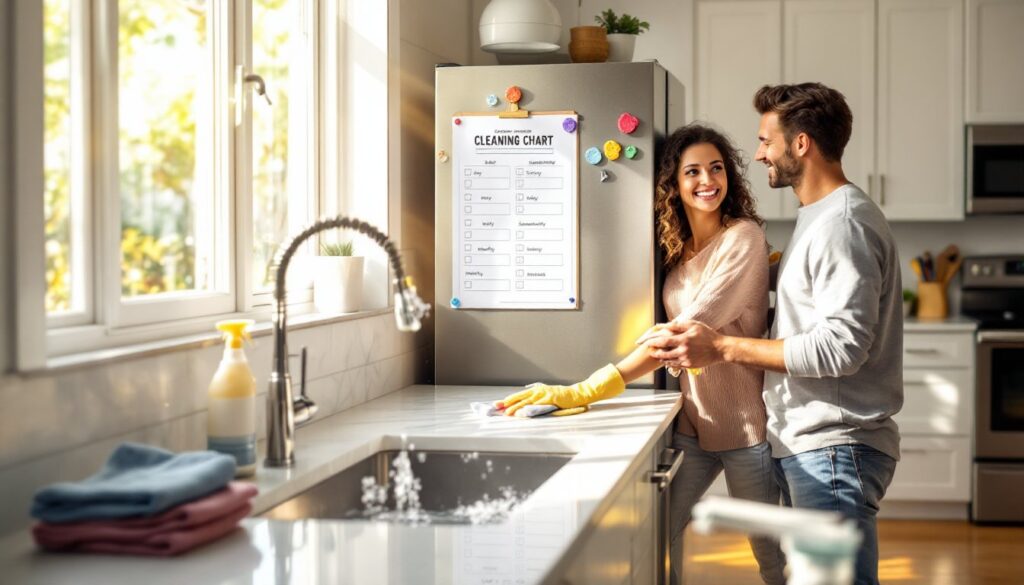
Post the chart visibly, refrigerator, bathroom mirror, or shared digital calendar. Digital charts (Google Calendar, shared apps) work for tech-forward households: printed charts work anywhere. The format matters less than visibility and regular review.
Review and adjust quarterly. If a task feels perpetually undone, either it’s low priority (remove it) or it’s unrealistic (move it to monthly instead of weekly). A chart that lives on the fridge undone creates resentment, not motivation. Better a realistic, completed chart than an ambitious, ignored one.