Table of Contents
ToggleMost homeowners don’t think of scrubbing the bathroom or vacuuming the living room as a workout. But cleaning house actually burns a meaningful amount of calories, sometimes nearly as much as a dedicated gym session. The number varies depending on your body weight, the intensity of your cleaning routine, and which tasks you’re tackling. Understanding how many calories you burn while cleaning can help you appreciate the physical work you’re already doing around the home and even motivate you to keep your space tidy as a form of light exercise. Let’s break down the numbers and explore which cleaning tasks offer the best calorie burn.
Key Takeaways
- Cleaning house burns 75–200+ calories per 30 minutes depending on body weight, task type, and intensity, making it legitimate physical activity comparable to light exercise.
- Heavier individuals burn significantly more calories during the same cleaning tasks—a 200-pound person vacuuming burns roughly 36% more calories than a 150-pound person.
- High-intensity cleaning tasks like scrubbing bathrooms (120–160 calories), mopping (100–150 calories), and carrying laundry upstairs offer the greatest calorie burn potential.
- You can maximize calorie burn by cleaning at a faster pace, reducing breaks between tasks, tackling physically demanding jobs first, and using stairs strategically.
- Consistent, daily household cleaning contributes meaningfully to overall daily calorie expenditure and movement—roughly equivalent to 15–20 pounds of body fat burned annually with constant effort.
- Cleaning is beneficial supplemental activity but should not replace dedicated exercise like jogging or strength training for serious fitness goals.
Understanding Calories Burned During Household Chores
Calories burned during cleaning depend on a simple formula: body weight plus activity intensity plus duration. A 150-pound person doing light dusting for 30 minutes burns roughly 80–100 calories. The same person mopping floors at a faster pace might burn 150–200 calories in that same window. These numbers come from research by exercise scientists and the American Council on Exercise, which tracks energy expenditure across common household activities.
The key is that cleaning counts as physical activity. Your body is moving, engaging muscles, and elevating your heart rate. Unlike sitting at a desk or watching TV, cleaning demands sustained effort. Even gentle tasks like organizing a closet or wiping down surfaces require you to stand, bend, and reach repeatedly. Over time, these activities add up. A person who spends two hours a day on household chores could burn 300–500 extra calories daily, equivalent to a moderate workout without needing to step foot in a gym.
Factors That Affect Calorie Burn While Cleaning
Not everyone burns the same number of calories doing identical tasks. Several factors create variation in how much energy your body expends.
Body Weight and Metabolism
Heavier individuals burn more calories performing the same activity because their bodies require more energy to move. A 200-pound person vacuuming for 30 minutes might burn 150 calories, while a 150-pound person burns about 110 calories in the same time frame. Metabolism also plays a role, people with faster metabolic rates burn calories more efficiently, though the difference is usually smaller than the impact of body weight.
Age and fitness level matter too. Someone who is deconditioned may work harder (and burn more calories) doing light housework than an athlete performing the same task at the same speed. Conversely, a fit person’s body may become more efficient, burning fewer calories for equivalent effort over time.
Intensity and Speed of Your Cleaning Routine
How fast and vigorously you clean makes a huge difference. Slow, casual dusting is low-intensity work. Rapid scrubbing, aggressive mopping, or carrying heavy loads upstairs is moderate to high-intensity. The difference between leisurely straightening and energetic deep cleaning can mean 100+ extra calories per hour.
Climbing stairs while carrying laundry or supplies raises intensity significantly. Bending, squatting, and repeated motions (like scrubbing or wringing out a mop) engage more muscle groups and elevate heart rate more than static organizing. If you approach cleaning with purpose, moving quickly, taking minimal breaks, and tackling physically demanding tasks, you’ll burn substantially more calories than plodding through chores at a relaxed pace.
Calorie Burn by Specific Cleaning Tasks
Different cleaning tasks burn calories at different rates. Here’s a realistic breakdown for a 150-pound person performing each task for 30 minutes:
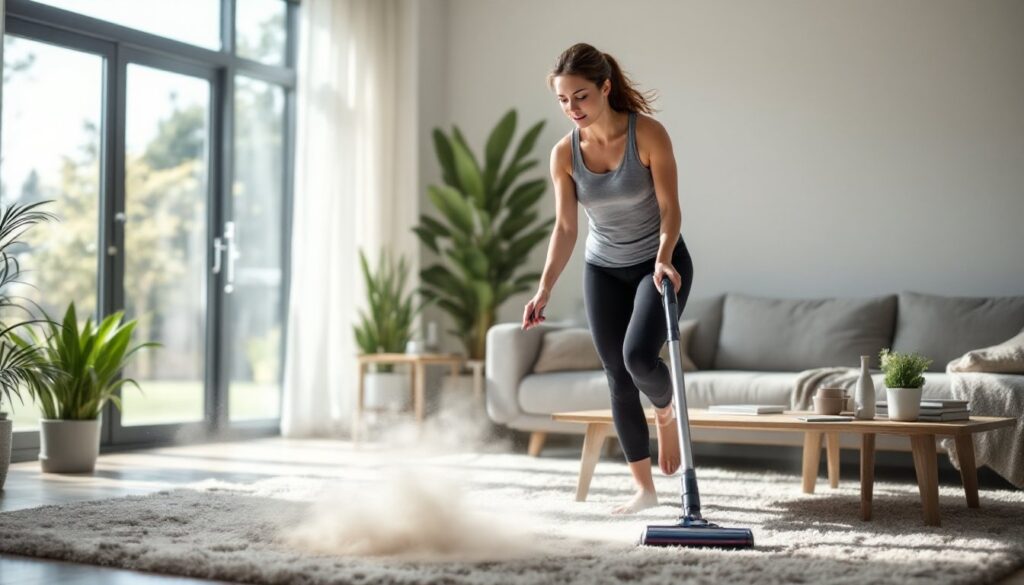
Vacuuming: 90–120 calories. Pushing a heavy upright vacuum, especially on carpet with lots of furniture to navigate around, is more demanding than gliding a lightweight stick vacuum over hardwood. The repetitive pushing motion and weight of the machine create steady calorie burn.
Mopping: 100–150 calories. Wet mopping burns more than vacuuming because you’re wringing out the mop, bending repeatedly, and often working against wet-floor resistance. Faster, more energetic mopping pushes toward the higher end.
Scrubbing (bathrooms or tile): 120–160 calories. This is one of the most calorie-intensive household tasks. You’re on your hands and knees or standing with arms extended, engaging your core, shoulders, and arms. Vigorous scrubbing with a stiff brush bumps calorie burn higher.
Dusting and wiping surfaces: 60–100 calories. Light and straightforward, dusting burns fewer calories than floor work. Reaching high shelves or tackling dust-laden baseboards raises the total slightly.
Laundry (washing, drying, folding, carrying): 80–140 calories. Carrying heavy laundry baskets up and down stairs is the calorie driver here. Sorting, folding, and putting away clothes in drawers burns steadily but at a lower rate. Multiple trips upstairs significantly increase total burn.
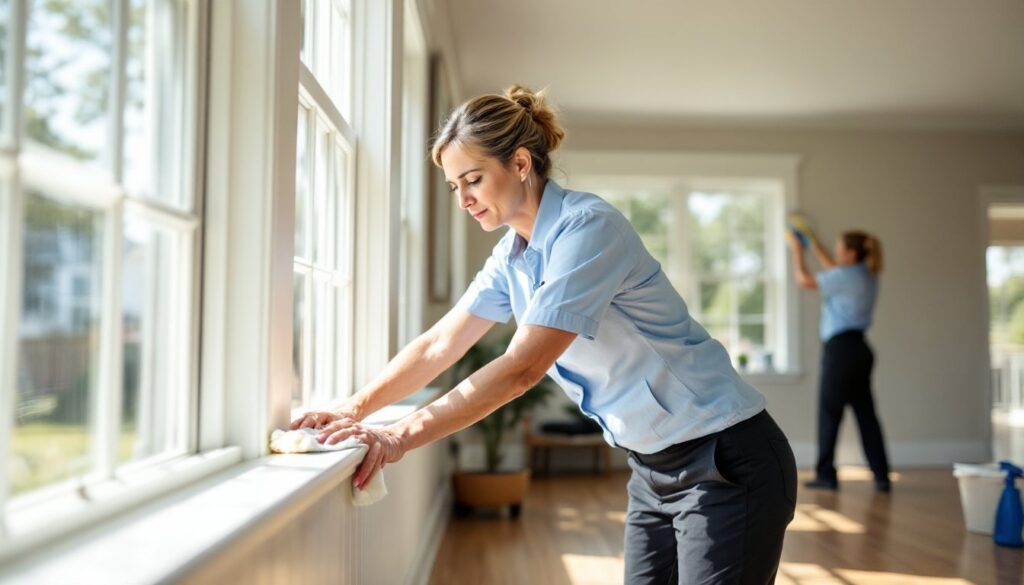
Scrubbing windows and mirrors: 100–130 calories. Repetitive circular motions, reaching high, and applying pressure engage your arms and core. It’s surprisingly demanding work.
Organizing and decluttering: 70–110 calories. Moving items, bending to access low shelves, standing on step stools, and carrying items to donation piles all contribute. Faster-paced organizing burns more.
Remember: these estimates assume a 150-pound person. Heavier individuals can add roughly 30–50% more calories: lighter people burn 20–30% less. Faster, more energetic work also pushes toward the higher end of each range.
Maximize Your Calorie Burn While Cleaning
If you want to get more out of your cleaning routine, a few adjustments turn it into a more effective form of physical activity.
Speed up your pace. Moving quickly through tasks increases heart rate and calorie burn. You don’t need to run around the house, but purposeful, energetic cleaning significantly outpaces leisurely work.
Tackle physically demanding tasks. Scrubbing, mopping, and carrying laundry upstairs burn more than light dusting. Prioritize these jobs if calorie burn is a goal.
Reduce breaks. Continuous activity keeps your heart rate elevated. Instead of sitting down between tasks, move directly from one chore to the next.
Add resistance. Carrying a weighted backpack or using heavier cleaning tools (like a more substantial mop) requires more effort. A full bucket of water is heavier than an empty one, use that to your advantage.
Include stairs. Houses with multiple levels naturally create more demanding work. Focus on carrying laundry, supplies, or items between floors.
Stay consistent. The cumulative effect of regular cleaning is significant. Two hours of daily household activity over a year equals substantial calorie expenditure, potentially equivalent to 15–20 pounds of body fat, assuming diet stays constant.
According to guidance from Real Simple’s home organization tips, breaking cleaning into frequent, purposeful sessions (rather than marathon weekend deep-cleans) keeps you moving regularly throughout the week. The Spruce’s cleaning guides also emphasize that maintaining a clean home with consistent effort is less taxing than allowing clutter to accumulate. Both consistency and intensity matter for maximizing the physical benefit of household chores.
That said, don’t view cleaning as a substitute for dedicated exercise if you’re aiming for serious fitness goals. Cleaning complements activity, it’s beneficial movement, but typically lower-intensity than jogging, cycling, or strength training. But, for people with sedentary jobs, regular energetic cleaning does contribute meaningfully to daily calorie expenditure and movement.
According to Good Housekeeping’s tested cleaning recommendations, using the right tools makes work more efficient and often more engaging. Lighter, well-designed tools (like ergonomic mops or cordless vacuums) reduce strain while allowing faster movement. Investing in tools that feel good to use often naturally increases cleaning speed and intensity.
Conclusion
Cleaning house burns a real, measurable amount of calories, anywhere from 75 to 200+ per 30 minutes, depending on your weight, the task, and how vigorously you work. It’s not a substitute for intentional exercise, but it’s legitimate physical activity that adds up over time. By understanding which tasks burn the most and how to maximize intensity, you can appreciate the fitness benefit already embedded in keeping your home clean. For most homeowners, consistent, energetic cleaning is a bonus form of movement that contributes to overall daily activity and calorie expenditure.