Table of Contents
ToggleYour home’s gutters work quietly, year-round, directing water away from your foundation, siding, and roof. But gutters clogged with leaves, twigs, and debris can’t do their job, and the damage compounds fast. A house gutter cleaning service isn’t just about aesthetics: it’s preventative maintenance that saves thousands in water damage, foundation repair, and pest control. This guide walks you through why regular gutter cleaning matters, how to spot problems, and whether to tackle it yourself or hire a professional.
Key Takeaways
- Regular house gutter cleaning service prevents costly damage like foundation cracks, basement leaks, and mold growth by keeping water properly channeled away from your home.
- Most experts recommend gutter cleaning twice annually—in late spring and fall—though homes with many trees or in heavy storm regions may need quarterly maintenance.
- Professional gutter cleaning services are safer, faster, and more thorough than DIY, especially for homes with steep roofs, higher gutters, or extensive tree coverage.
- Watch for red flags like sagging gutters, water stains on your foundation, visible debris buildup, and granules in gutters, which signal it’s time to call a professional.
- Professional services cost $150–$300 depending on your home size and region, and should include gutter inspection, downspout clearing, and damage assessment.
- When selecting a gutter cleaning service, verify at least 3–5 years in business, request written estimates and insurance documentation, and check multiple contractors before hiring.
Why Regular Gutter Cleaning Matters for Your Home
Gutters are the first line of defense against water intrusion. They channel rain away from your roof, fascia, foundation, and landscaping. When gutters become clogged, water pools, seeps into soffit joints, and spills over the edges, pooling at your foundation or running down your exterior walls.
Over time, this leads to foundation cracks, basement leaks, mold growth, and accelerated wood rot on your fascia and roofing structure. In freeze-thaw climates, pooled water expands as ice, widening cracks and loosening fasteners. Clogged gutters also create ideal habitats for mosquitoes, and the standing water can weaken gutters themselves, requiring costly replacement decades earlier than normal.
Most experts recommend gutter cleaning twice annually, once in late spring after pollen season, and again in fall after leaves drop. Homes with many trees or in regions with heavy storms may need quarterly cleaning. Regular cleaning extends gutter lifespan, prevents foundation damage, and keeps water management working as designed.
Signs Your Gutters Need Professional Cleaning
You don’t have to wait for scheduled maintenance. If you spot these red flags, it’s time to act. Look for sagging gutters that dip between downspouts, this signals water weight and deterioration. Water stains or wet spots on your foundation, basement walls, or exterior siding mean gutters aren’t draining properly.
Check your downspouts and the ground near your foundation. If water isn’t flowing far from the house or if you see erosion trenches at the downspout outlet, your gutter system isn’t performing. Listen during rain, if you hear water pouring over the edge instead of flowing through downspouts, debris is blocking the channel.
Visible debris from the ground, leaves, twigs, or dark granular material (asphalt shingle wear) accumulating in gutters or around downspouts, is the clearest sign. If you see granules in gutters, your roof is aging and shedding more debris than usual, meaning you’ll need more frequent cleaning. Never ignore moss or algae growth: it retains moisture and accelerates deterioration.
DIY vs. Professional Gutter Cleaning Services
DIY Approach
Cleaning gutters yourself is possible if you’re comfortable on a ladder and willing to put in the labor. You’ll need a 20–24-foot extension ladder, work gloves (leather or nitrile-coated), eye protection, and a bucket or tarp to collect debris. Some DIYers use a trowel or gutter scoop to scrape out wet leaves, while others prefer a wet/dry shop vacuum with a downspout adapter, this keeps debris out of your eyes and simplifies cleanup.
Key considerations: most DIY gutter falls happen on ladders, so secure your ladder on level ground and have someone spot you. Never lean beyond arm’s reach: move the ladder frequently. If your gutters are higher than 20 feet, pitched steep, or require roof access, this isn’t a DIY task, hire a professional.
DIY works best for light seasonal maintenance, clearing obvious debris after storms or as part of spring/fall routine. If you find standing water, sagging sections, or gutter separation, or if debris is packed solid, a professional has tools and experience to diagnose and fix underlying problems.
Professional Service Benefits
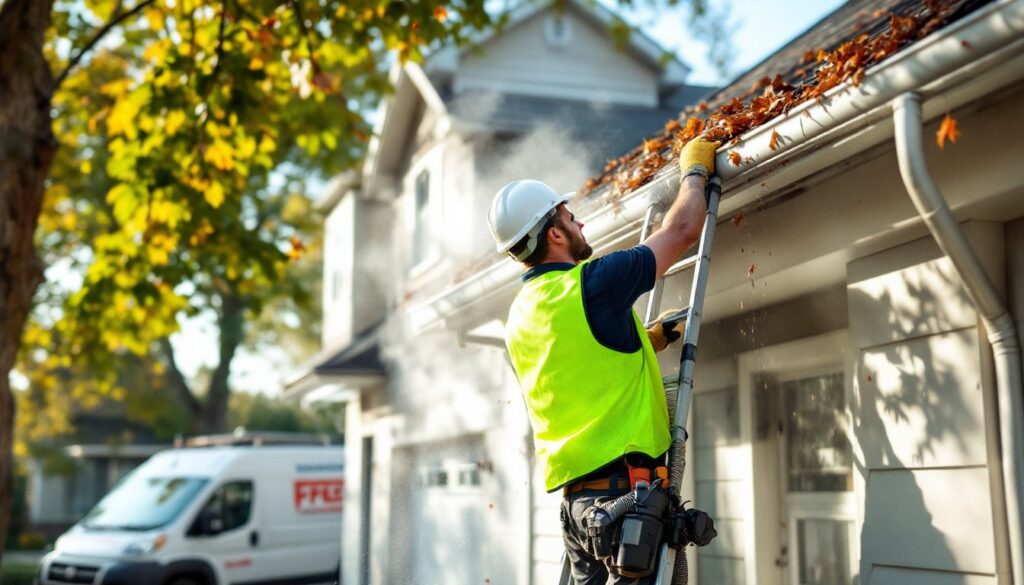
A professional gutter cleaning service handles the heavy lifting. Technicians arrive with commercial-grade equipment, often vacuum trucks that suck debris directly from gutters without hand-scooping, reducing mess and time. They inspect gutters for damage, check downspouts, verify proper slope, and spot problems you’d miss from a ladder, like separated seams, rusted spots, or hidden leaks.
Professionals work faster, a typical home takes 1–2 hours versus half a day of DIY labor. They carry insurance and workers’ compensation, so if an accident occurs, you’re protected. They also dispose of debris responsibly and can spot roof or siding damage while they’re up there. For most homeowners, especially those over 40, in single-story homes with steep roofs, or those with many trees, professional cleaning is safer and more thorough. According to industry data on gutter maintenance, professional cleaners catch problems before they become expensive repairs.
What to Expect During a Professional Gutter Cleaning
When you book a gutter cleaning service, here’s what a reputable company will do. They’ll arrive with equipment, usually a van-mounted vacuum system, hand tools, and safety harnesses. They’ll inspect your gutters from the ground and ladder, checking slope, fasteners, and visible damage.
The technician will clean each section of gutter, typically working from one end to the other, using a vacuum or scoop to remove debris, then flushing gutters with water to confirm proper drainage. They’ll check downspout connections, clear any blockages inside downspouts (using a plumbing snake if needed), and verify water flows away from your foundation. A thorough service includes checking fascia boards for rot, inspecting seams for leaks, and noting any repairs needed.
Before leaving, they’ll show you photos or point out findings, sagging sections, rust spots, separation, or roof damage. They may recommend gutter repairs, adjustments, or guards to reduce future debris accumulation. Most reputable services offer estimates for additional work and can schedule repairs. The entire process takes 1–2 hours for an average home. Plan for a service cost ranging from $150 to $300 depending on home size, gutter length, debris volume, and your region, get multiple quotes to compare.
How to Choose the Right Gutter Cleaning Service
Not all gutter cleaning services are equal. Start by asking for references or checking online reviews, Google, HomeAdvisor, and local directories are good sources. Look for companies that have been in business at least 3–5 years and hold liability insurance and workers’ comp coverage.
Get written estimates from at least two services. A good estimate includes gutter size, linear footage, downspout count, any additional services (gutter repair, guard installation), and pricing breakdown. Avoid services that give verbal quotes without an on-site look, they don’t know your actual situation.
Ask what their process includes: Do they inspect gutters? Do they flush downspouts? Will they check for damage and provide a written report? Red flags include pressure to buy expensive add-ons on the spot, lack of insurance documentation, or refusing to provide references. Services that use vacuum trucks are often more efficient, but hand-cleaning also works if done carefully.
Timing matters too. Schedule cleaning in late spring and fall, but avoid peak times (mid-fall when everyone’s cleaning at once). Spring is often less busy, meaning faster scheduling and competitive pricing. If your gutters are very dirty or you have gutter guards already installed, confirm the service handles those. Ask about guarantees, some services offer follow-up inspections or will re-clean if debris returns soon after service. Expert home improvement sources like Bob Vila recommend checking multiple contractors before deciding.