Imagine walking into a space that feels like a hip factory but without the risk of getting your foot stuck in a conveyor belt. That’s the magic of industrial interior design. With its raw materials and open layouts, this style transforms everyday spaces into stunning showcases of creativity. It’s the perfect blend of grit and glam, where exposed brick walls meet sleek metal accents, creating an atmosphere that’s both inviting and edgy.
Understanding Industrial Interior Design
Industrial interior design merges raw materials with open layouts to create distinctive spaces. This style emphasizes functionality while maintaining an aesthetic appeal.
Definition and Characteristics
Industrial interior design features exposed brick walls, concrete floors, and metal fixtures. A minimalist approach often highlights the beauty of simplicity. Warmth derives from wooden elements, creating contrast against the colder materials. Large, open spaces facilitate airflow and natural light, enhancing the overall experience. Utilitarian furniture complements this design, focusing on purpose and structure. Combining these characteristics forms an inviting yet edgy atmosphere.
Historical Context
Industrial design emerged in the late 19th century with the rise of factories and warehouses. As urbanization increased, abandoned structures transformed into living spaces. Artists and designers embraced this shift, fostering creativity within the industrial context. The style gained popularity during the 2000s, aligning with modern urban living trends. Today’s industrial interior design reflects a blend of historical elements with contemporary influences. This evolution showcases how past and present coexist harmoniously in design.
Key Elements of Industrial Interior Design
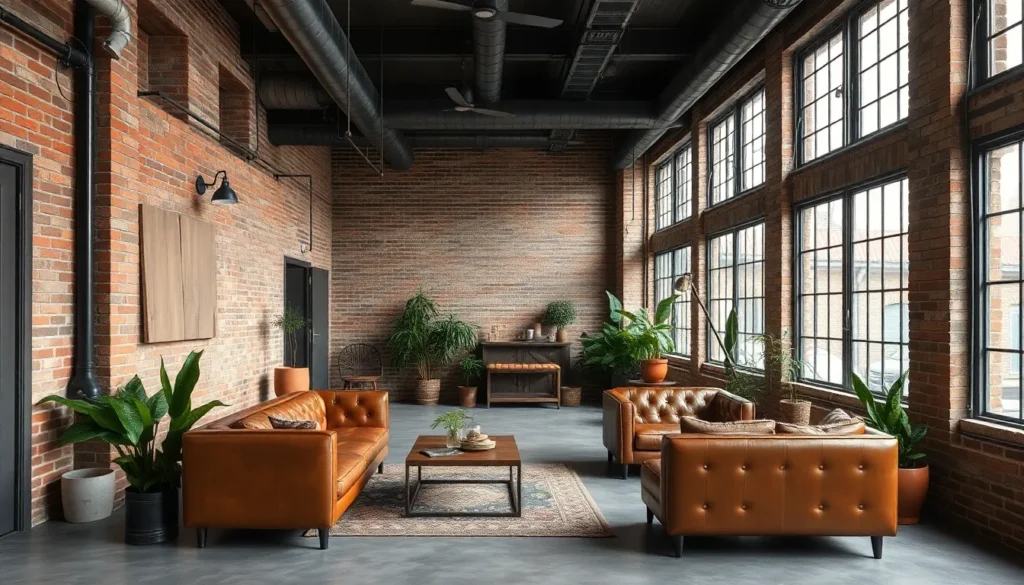
Industrial interior design incorporates distinct materials, color schemes, and overall aesthetics that define its unique character. Key elements include raw textures, earth tones, and a balance between industrial and cozy elements.
Materials and Textures
Exposed brick walls serve as a foundation for industrial spaces. Concrete floors create an authentic, rugged appearance that enhances durability. Metal fixtures, such as steel beams and piping, add an edgy touch to the design. Wood elements provide warmth, contrasting beautifully with cooler materials. Glass accents introduce transparency while retaining the industrial charm. Leather upholstery offers a touch of sophistication and comfort. Natural materials contribute to the overall raw aesthetic, creating a harmonious blend of texture and form.
Color Schemes
Neutral color palettes dominate industrial design. Shades like gray, beige, and brown create a subtle backdrop for bolder accents. Rich, dark colors like charcoal and navy enhance the character of the space. Warm tones, such as rust and ochre, add depth and interest without overpowering the overall scheme. Lighting fixtures often feature metallic finishes, reinforcing the industrial vibe. Accent colors can emerge through decor items, artwork, or plants, adding layers without compromising the minimalist essence. White or light-colored walls enhance natural light, making spaces feel airy and open.
Iconic Industrial Interior Design Examples
Industrial interior design thrives in various environments, both residential and commercial, showcasing distinct features that define this style.
Residential Spaces
In residential contexts, industrial design often embraces open floor plans. Exposed brick walls contribute to the overall aesthetic while showcasing raw beauty. Concrete or hardwood floors enhance durability and complement rustic elements. Fixtures made of metal contribute to an edgy yet inviting atmosphere. Spaces frequently incorporate large windows, allowing natural light to flood in and create warmth. Decor may include vintage furniture or art pieces that enhance the industrial vibe. This style captures both functionality and creativity, making homes unique and stylish.
Commercial Spaces
In commercial environments, industrial design shines through in cafes, restaurants, and offices. Raw materials, such as reclaimed wood and steel, provide an urban feel. High ceilings give a sense of openness, while large, unobstructed layouts foster collaboration. Lighting fixtures often feature exposed bulbs or metallic designs, reinforcing the industrial aesthetic. These spaces might incorporate vintage decor and furniture, creating a nostalgic charm. The blend of function and style makes commercial venues stand out, catering to contemporary tastes and trends.
Tips for Achieving Industrial Interior Design
Achieving an industrial interior design aesthetic requires careful consideration of various elements. This style thrives on a balance of raw materials and functional décor choices.
Selecting the Right Furniture
Furniture selection plays a crucial role in industrial design. Opt for pieces that feature metal frames, reclaimed wood, or leather for an authentic look. Choose sleek lines without excessive ornamentation. Sofas and chairs should provide comfort while complementing the rugged surroundings. Including vintage finds like old factory stools or reclaimed wooden tables enhances character. Furthermore, mix and match styles to maintain an eclectic feel. The aim lies in creating an inviting, lived-in space that feels both modern and historically rooted.
Incorporating Accessories
Accessories complete the industrial design narrative. Use items that showcase the raw textures and earthy tones characteristic of this style. Metal light fixtures serve as striking focal points while providing ample illumination. Add art pieces that reflect the industrial theme, such as black-and-white photographs or abstract prints. Decorate with statement pieces like large clock faces or vintage signs to enhance visual interest. Incorporate plants in rustic pots to soften the harsher elements without compromising the aesthetic. Accessories should reinforce the overall theme, contributing to a cohesive industrial atmosphere.
Conclusion
Industrial interior design offers a captivating blend of raw materials and modern aesthetics. Its unique characteristics not only reflect a rich historical context but also cater to contemporary tastes. By harmonizing textures and colors, this style creates inviting spaces that balance ruggedness with warmth.
Whether in residential or commercial settings, the industrial design approach enhances functionality while providing a visually striking environment. With thoughtful furniture selection and carefully chosen accessories, anyone can achieve this distinctive look. The enduring appeal of industrial design lies in its ability to transform spaces into stylish yet practical areas that resonate with both history and modernity.