In the world of home decor, the bedroom often gets a bad rap as just a place to crash after a long day. But it’s time to change that narrative. With the latest bedroom design trends, this sanctuary can transform into a stylish retreat that even your dreams will envy. From cozy nooks to bold color palettes, the possibilities are endless.
Overview of Bedroom Design Trends
The importance of a well-designed bedroom goes beyond mere functionality. Emphasizing coziness, current trends focus on creating spaces that exude comfort and personal style. Designers incorporate elements that invite relaxation, such as layered textiles and soft color schemes.
Natural materials feature prominently, with wood, stone, and plants enhancing the organic feel of the environment. Neutral tones remain popular, creating serene backdrops, but bold color choices are increasingly embraced. Jewel tones and earthy shades add richness, promoting a sense of warmth and intimacy.
Furniture selection plays a crucial role in the latest trends. Multi-functional pieces, like storage beds and convertible sofas, optimize space and provide practicality. Comfort remains a priority, with plush mattresses and ergonomic designs taking center stage.
Lighting choices evolve, too, with a mix of ambient and task lighting enhancing functionality and atmosphere. Stylish sconces, statement chandeliers, and smart lighting systems offer flexibility while creating a personalized ambiance.
Textile trends highlight the significance of layering. Mixing materials, like cotton, linen, and velvet, creates visual interest while contributing to a cozy atmosphere. Patterns and textures combine for a rich sensory experience, elevating the aesthetics of the bedroom.
Incorporating technology seamlessly aligns with contemporary preferences. Smart home devices offer convenience and control, allowing users to adjust lighting, temperature, and entertainment with ease. As a result, bedroom design trends continue to evolve, reflecting changing lifestyles and priorities.
Color Palettes in Modern Bedrooms
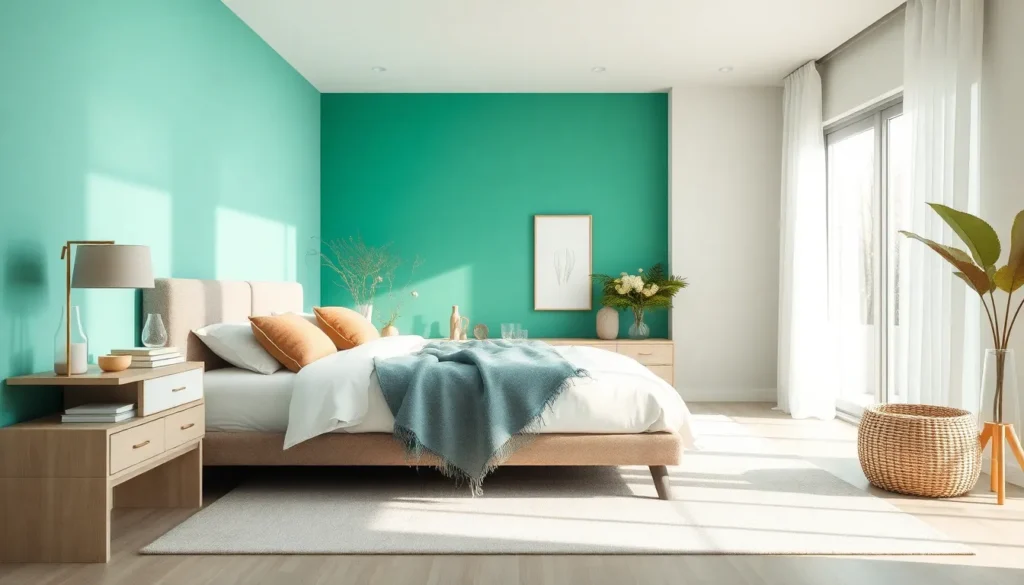
Color palettes impact the mood and style of modern bedrooms. Designers often choose shades that create a serene environment.
Trending Colors and Their Effects
Soft neutrals such as beige, gray, and white provide a calming space. Blue tones, especially pastel variations, also evoke tranquility and relaxation. In contrast, bold colors like emerald green and deep navy add vibrancy and richness, making a striking statement. Warm colors, including terracotta and mustard yellow, promote energy and warmth, enhancing overall comfort. Current trends favor natural hues that mirror the outdoors, establishing a connection with nature.
Combining Shades for Aesthetic Appeal
Harmonious color combinations elevate visual interest in bedrooms. Pairing soft whites with deep blues creates a sophisticated yet inviting atmosphere. Mixing warm neutrals with bold jewel tones results in a balanced aesthetic that appeals to many tastes. Accent walls featuring contrasting colors can serve as focal points, drawing attention without overwhelming the space. Utilizing various shades within the same color family introduces depth and dimension, enriching the overall design. Thoughtful layering of colors ensures a cohesive and stylish environment that reflects personal style and comfort.
Furniture Styles and Layouts
Furniture selection shapes the overall vibe of a bedroom. Current trends prioritize simplicity and functionality, ensuring every piece contributes to a harmonious space.
Minimalist Designs for Space Optimization
Minimalist designs focus on clean lines and uncluttered spaces. Functional furniture emphasizes practicality, featuring multi-purpose pieces that save room. For instance, storage ottomans or bed frames with built-in drawers maximize storage without sacrificing style. Bright colors and natural light enhance the open feel of the room. Furniture arrangements encourage flow, allowing easy movement without obstacles. Choosing fewer but impactful items creates a balanced aesthetic, promoting relaxation and tranquility.
Vintage and Eclectic Inspirations
Vintage and eclectic inspirations add character and charm. Combining various styles and textures creates a unique atmosphere that reflects personal taste. Incorporating antique dressers or retro nightstands brings nostalgia into the space. Layering patterns in textiles, like throw pillows and blankets, enhances visual interest. Bold artwork can serve as a statement piece, showcasing individuality. Mixing modern elements with vintage finds ensures a cohesive yet dynamic layout. Each carefully chosen item contributes to a curated environment filled with warmth and personality.
Textiles and Fabrics
Textiles and fabrics hold significant value in bedroom design, enhancing both comfort and visual appeal. Natural materials alongside rich textures symbolize current trends, emphasizing a connection to nature.
Popular Material Choices
Cotton emerges as a favorite for bedding, offering breathability and softness. Linen, known for its durability and gentle texture, is gaining traction in curtains and upholstery. Velvet adds opulence and warmth to space, while sustainable materials like organic bamboo and hemp reflect eco-friendly choices. Synthetic blends provide practicality, ensuring easy maintenance without compromising style. Designers often combine these materials for a layered effect that enhances the overall aesthetic.
Layering Textiles for Comfort
Layering textiles increases both comfort and visual interest in bedrooms. Combining various textures, from plush throws to intricate patterns, creates inviting spaces. A well-placed quilt draped over the bed can add warmth, while accent pillows enhance coziness. Using a mix of materials, such as cotton sheets topped with a wool blanket, promotes a comfortable sleeping environment. Incorporating area rugs underfoot softens hard surfaces while providing depth. Overall, thoughtful layering transforms a simple bedroom into a luxurious retreat.
Lighting Innovations
Lighting in bedroom design focuses on creating atmosphere and functionality. The integration of ambient and task lighting plays a crucial role in modern aesthetics.
Ambient vs. Task Lighting
Ambient lighting provides overall illumination, creating a warm and inviting environment. Task lighting serves specific functions, such as reading or working. Overhead fixtures like chandeliers and pendant lights often set the tone, while bedside lamps offer targeted brightness. Each layer enhances usability and comfort. Choosing dimmable options gives flexibility for adjusting brightness according to mood or activity. Combining these layers results in a balanced and versatile lighting scheme that meets daily needs.
Smart Lighting Solutions
Smart lighting solutions revolutionize bedroom environments through automation and customization. Voice-controlled systems allow for seamless adjustments, creating convenience while enhancing ambiance. Apps enable control over light temperature and intensity, allowing personalization for any occasion. Smart bulbs offer features like color-changing options, promoting creativity in design. Integration with home automation systems streamlines functions, connecting with various devices effortlessly. These innovations reflect the growing trend towards intelligent living spaces, adapting to lifestyles and preferences effectively.
Conclusion
Today’s bedroom design trends reflect a shift towards creating personal sanctuaries that prioritize comfort and style. By embracing natural materials and thoughtful color palettes, individuals can transform their bedrooms into inviting retreats.
Multi-functional furniture and smart technology enhance both practicality and ambiance, making it easier to adapt spaces to various needs. Layering textiles and incorporating vintage elements add character and warmth, allowing for a unique expression of personal taste.
As these trends continue to evolve, the bedroom remains a vital space for relaxation and rejuvenation, reflecting the importance of a well-designed environment in modern living.